
| Photograph Information |
Photographer's Comments |
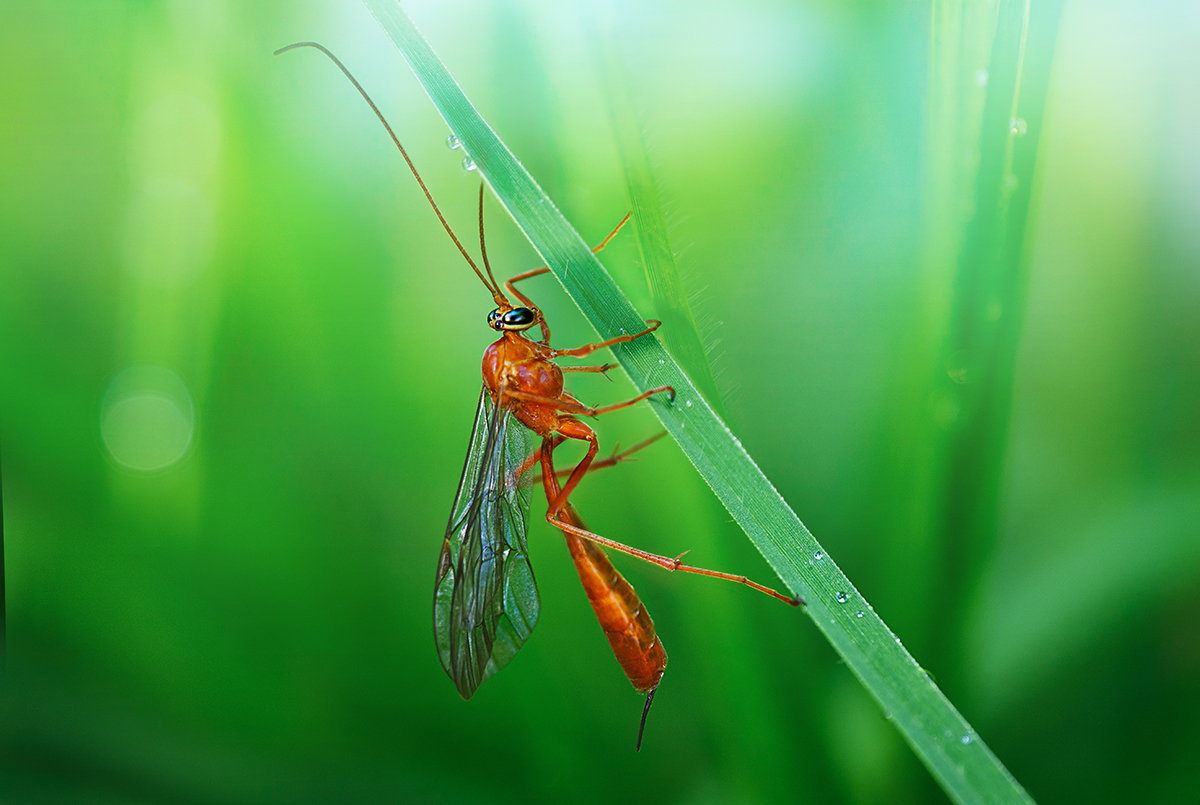
Challenge: Extended Free Study 2026-03 (Extended Editing) Collection: 2026 CHALLENGES ETC Camera: Olympus OM-D E-M1 Mark III Lens: OM System 90mm f/3.5 Macro IS PRO M.Zuiko Digital ED Date: Mar 21, 2026 Aperture: 4.0 ISO: 250 Shutter: 1/100 Galleries: Macro, Insects, etc Date Uploaded: Apr 12, 2026
|
AFTER VOTING .
thanks heaps for all the wonderful comments .. they mean a lot .. :)
Orange caterpillar parasite - a common Australian parasitic ...
The Orange Caterpillar Parasite Wasp (often Netelia producta or similar Ophioninae species) is a beneficial, solitary Australian wasp, roughly 2cm long, (0.787402 inches) that acts as a natural pest controller.
Females lay eggs on caterpillars, which then feed on the host, acting as a natural control agent in gardens. They are generally harmless to humans.
Key Characteristics and Lifecycle:
Appearance: Bright orange to light brown bodies, long antennae, and often large simple eyes (ocelli).
Parasitic Method: The female stings and temporarily paralyzes a caterpillar, then lays a black egg directly onto its skin near the head.
Larva Development: The hatched larva hangs onto the caterpillar, feeding on it externally as the caterpillar moves to the soil to pupate.
Pupation: The wasp larva eventually kills the caterpillar in the soil and forms a black, furry cocoon.
Habits: Adults are solitary, often active at night, and feed on nectar.
Gardening Impact:
They are highly beneficial for controlling pest caterpillars in vegetable gardens and crops. They are considered a sign of a healthy ecosystem. |
Home -
Challenges -
Community -
League -
Photos -
Cameras -
Lenses -
Learn -
Help -
Terms of Use -
Privacy -
Top ^
DPChallenge, and website content and design, Copyright © 2001-2026 Challenging Technologies, LLC.
All digital photo copyrights belong to the photographers and may not be used without permission.
Current Server Time: 04/25/2026 10:17:47 PM EDT.