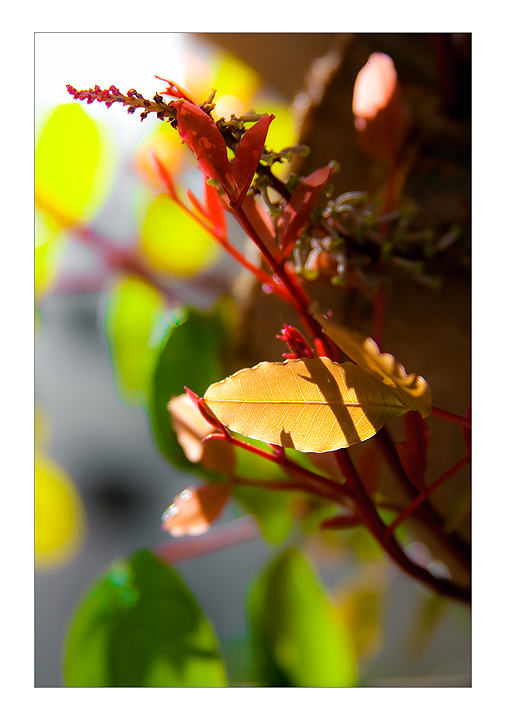
The carob tree (Arabic: خروب) Ceratonia siliqua, is a species of flowering evergreen shrub or tree in thepea family, Fabaceae, that is native to the Mediterranean region. It is cultivated for its edible seed pods. Carobs are also known as St. John's bread because, according to tradition of some Christians, St. John the Baptist subsisted on them in the wilderness. A similar legend exists of Rabbi Shimon bar Yochai and his son.
This tree grows up to 10 meters (33 ft) tall. The crown is broad and semi-spherical, supported by a thick trunk with brown rough bark and sturdy branches. Leaves are 10–20 centimeters (3.9–7.9 in) long, alternate, pinnate, and may or may not have a terminal leaflet. It is frost-tolerant.
Most carob trees are dioecious. The trees blossom in autumn (September-October). The flowers are small and numerous, spirally arranged along the inflorescence axis in catkin-like racemes borne on spurs from old wood and even on the trunk (cauliflory); they are pollinated by both wind and insects. Male flowers produce a characteristic odor, resembling semen.[3] The fruit is a pod that can be elongated, compressed, straight or curved, and thickened at the sutures. The pods take a full year to develop and ripen. The ripe pods eventually fall to the ground and are eaten by various mammals, thereby dispersing the seed.
Statistics
Place: 119 out of 245 Avg (all users): 5.5685 Avg (commenters): 6.6000 Avg (participants): 5.5977 Avg (non-participants): 5.5254 Views since voting: 689 Views during voting: 11 Votes: 146 Comments: 5 Favorites: 0





 Add photograph to your favorites
 Add photographer to your favorites


 Photographer found comment helpful.


