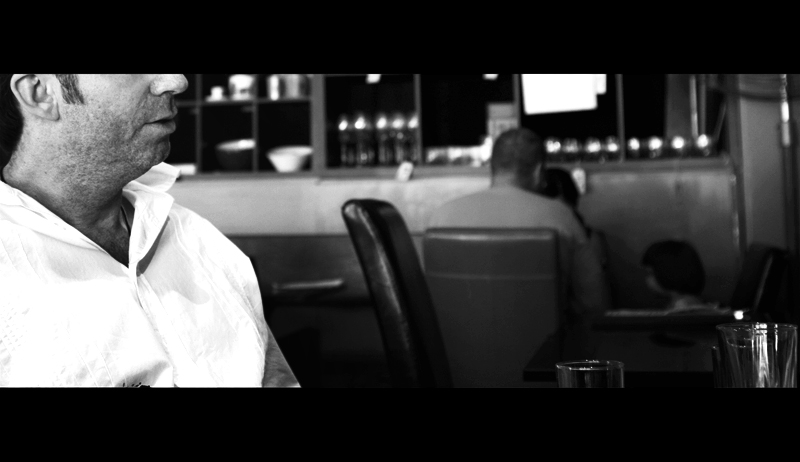
This is just so very appealing to me - the truncated view some would see as a compositional flaw, or at least question the point of it (why not show his whole head?), but I think it serves the purpose of concentrating our attention on the mundane in surprising ways. When we look at a shot that is traditionally composed I think we tend to switch to autopilot and drink in the iconic and expected forms before our eyes, without really seeing them - we fall back on visual shorthand, the viewing side of it I mean, not just in the presenting. When we are faced with a non-traditional framing, we are prodded to really look.
Also I like how that chair back neatly divides this image into two tableaux, one of the foreground man and his implied companion just off to the right, and the other of the family background grouping. |




 Add photograph to your favorites
 Add photographer to your favorites

 Photographer found comment helpful.