| Author | Thread |
|
|
02/07/2010 07:02:39 AM · #1 |
I am struggeling to take sharp photos with detail of birds. I am using Nikon 80 - 400 mm lens and d700 camera... Can I do something else? Will my 70 - 200 mm lens with teleconvertor work beter? Can camera settings help - I am already bumping ISO up...Must I consider buying a new lens? 500 mm f4 or 400mm f2.8?
please help |
|
|
|
02/07/2010 07:14:33 AM · #2 |
If I had a Nikon and $10,000 disposable cash then the 400 F/2.8 seems like a no brainier.
Message edited by author 2010-02-07 07:33:27. |
|
|
|
02/07/2010 08:07:39 AM · #3 |
If the 400mm or 500mm is an option then go for it. Birds are small, the 70-200 might not get you close enough. I think the pros use the 500mm, and put converters on it if it doesn't get them close enough.
If I could choose one I would go for the 400mm f/2.8, even with converters (especially now when they have announced upgrades) that's seems to be an awesome lens. You could get 800mm f/5.6 with the 2x converter. I dream about that combination every night. |
|
|
|
02/07/2010 08:43:30 AM · #4 |
It takes lots of practice, the setting I use with my 170-500 and canon are f8 iso 400. I use the canon on AI focus dont use single focus .
what focus are you using, You should be fine with the lens you are using and dont hand hold if you dont have one get a monopod with a ball head on it.
Don't know if that helps at all. |
|
|
|
02/07/2010 08:52:52 AM · #5 |
You need to have about a 1/2000 sec or better to hand hold. Tripods, if feasible, are by far the best idea.
|
|
|
|
02/07/2010 12:48:23 PM · #6 |
Originally posted by vawendy:
You need to have about a 1/2000 sec or better to hand hold. Tripods, if feasible, are by far the best idea. |
Hand held 1/50 sec :-p
;-)
Message edited by author 2010-02-07 12:49:19.
|
|
|
|
02/07/2010 01:07:51 PM · #7 |
Originally posted by Sevlow:
Originally posted by vawendy:
You need to have about a 1/2000 sec or better to hand hold. Tripods, if feasible, are by far the best idea. |
Hand held 1/50 sec :-p
;-) |
yup, but it still can be even sharper. There is still a hint of softness that would be obvious at 1:1. I have very few shots that are tack sharp at 1:1, and they were with a tripod. |
|
|
|
02/07/2010 01:40:28 PM · #8 |
One of my favorite things to do is to take bird shots. I've used the
Sigma 50-500, the Sigma 28-300, and the Canon 100-400 and all give good results.
I mostly handhold as tripods, for me, are just too cumbersome for moving birds. On this shoot, I probably took 200 exposures and was "happy" with about 10.
Hope this helps.
Here's one with the Sigma 28-300, with these details:
Shooting Mode Aperture-Priority AE
Tv( Shutter Speed ) 1/1000
Av( Aperture Value ) 5.6
Metering Mode Evaluative Metering
Exposure Compensation 0
ISO Speed 400
Lens 28.0 - 300.0 mm
Focal Length 300.0 mm
Image Size 3456x2304
Image Quality RAW
Original 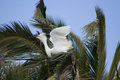 ... ...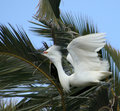
|
|
|
|
02/07/2010 02:02:28 PM · #9 |
Originally posted by vawendy:
You need to have about a 1/2000 sec or better to hand hold. Tripods, if feasible, are by far the best idea. |
This is too general a statement as it depends on many factors such as the focal length, whether you are using a crop sensor, whether the lens has IS, the direction and speed of the bird, etc.
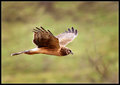
1/1000th. Handheld. Significant crop 300mm IS, full frame sensor.
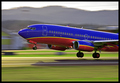
1/40th. Handheld. Less crop 300mm IS (position 2), full frame sensor.
That's just a big bird. :) Here's a 100% crop.

Now, of course, the faster the shutter the better for freezing the action, but if we all had to get 1/2000th before the pictures were good, none of us could shoot in the early morning hours when the birds are most active. |
|
|
|
02/07/2010 02:46:26 PM · #10 |
Marna you should be able to get fine shots with the Nikon 80-400 VR. I use that lens quite a bit but on a D300, a 1.5 crop camera so my perceived reach is further. On a D700 you will have to crop the photo down more or get close which is much harder to do. Of course a Nikon 500 or 600mm F4 would be wonderful but at a great cost.
As others have said here bird photography means taking many photos to get a few good ones, thank goodness for digital! I normally shoot in bursts which increases my chances for a few good ones. Boosting ISO (within reason) to boost shutter speed is needed as well as shooting with a wide aperture. I normally shoot at F.1 with the Nikon 80-400 because it is a bit sharper than at wide open but still blurs the background quite well. I use VR with a monopod most of the time but if I have stationary subjects you can not beat a sturdy tripod and shut off VR.
All in all with the D700 400mm is a bit short for bird photography and the 80-400 is an old lens with the old autofocus and old VR technology so it is not going to be as good as the newer lenses. I keep hearing and hoping that they will update it with AF-S and VR2 but they have been saying that for a few years. I'm afraid they know it will cut into their bigger lens sales if they did. |
|
|
|
02/07/2010 04:16:30 PM · #11 |
Thanks for all the responses - I do not have $10 000 yet, so it is back to shooting many bad shots, atleast other people are also having to do it.
kind regards |
|
|
|
02/07/2010 04:35:47 PM · #12 |
A big lens isn't always the answer, knowledge of the bird or animal will sometimes allow very close shooting. Patience and even more patience can yield great results.
I shoot with the Nikkor 18-200mm VRII, the 70-300mm VRII and the Sigma 150-500mm and can get good results with all at relatively low shutter speed and normally ISO 200. I use camo clothing, a hide and tempting treats to get the subject closer. If you work an area on a regular basis, wildlife becomes familiar with your presence and will approach closer.
I have just got a Kenko 1.4x converter and I am hoping this will give me that extra length to get the more timid birds. Keep trying and I am sure you will see an improvement, although there will still be many rejects for the few good ones.
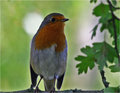
I took a photo of a Robin the other day whilst walking around and will put it up later.
Added:  Taken on grey day with a bit of sunshine. Taken with Nikkor 70-300mm at 300mm from about 15-20feet, f6.3, shutter 1/160th, ISO 200. Taken on grey day with a bit of sunshine. Taken with Nikkor 70-300mm at 300mm from about 15-20feet, f6.3, shutter 1/160th, ISO 200.
Message edited by author 2010-02-07 16:46:48. |
|
|
|
02/07/2010 04:56:04 PM · #13 |
I love birding. Its one of my new past-times... I use a Bigma, sometimes I use the 1.4 tc but birds are quick and sometimes I need that AF. I'd love to be able to afford one of those big nice VR lenses, but I'm not unhappy with my Bigma. Most birds are small and you need that 400+mm length. A lot of birders in another group I belong to are from FL and talk about using a shorter lens (200mm VR with tc), but they're shooting birds the size of flamingo's and I'm shooting finches... so I guess it depends on what you are shooting. I took my Bigma to the Outer Banks for the Wings over Water festival and it might not be the sharpest or the greatest lens, but I got some lovely Egret shots (in my portfolio).
Here are a few shots from yesterday, all taken with Bigma... just casual shooting in my backyard.
   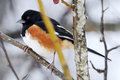
Message edited by author 2010-02-07 17:00:15. |
|
|
|
02/07/2010 05:26:35 PM · #14 |
If you are using manual focus, make sure that your diopter adjustment is set exactly right for your focusing eye. If you are using a tripod, and VR at the same time, that may be the problem. Also, VR does not work so well on a bird that is bobbing about or flying. You don't mention the max aperture of the lens you are using.
I shoot most of my birding shots with an old manual 300mm f4.5, using a monopod, and seem to get pretty good results. Getting close to the bird is a big part of getting good shots.
Many people tend to shake the camera when they mash the shutter button. Try setting your lens at max tele, and with the camera turned off, watch through the viewfinder as you simulate tripping the shutter button to see how much it shakes the camera. I have learned to gently squeeze off the rounds, as you would do with a rifle, instead of stabbing the shutter button. If you are doing this right, you will never know precisely when the shutter is going to trip. I do, of course shoot some by snapping the shot when the bird is in motion, or to catch a pose.
My monopod is my best piece of gear for the price when birding. It allows me freedom of motion, and offers a lot of stability. Another perk is that it holds up the heavy camera with no effort on my part when I am not actually shooting.
I also trade iso for good shutter speed, and shoot 1/2 to 1 1/2 stops dark to gain a little higher shutter speed, then bring up the brightness in PP. This also helps to prevent overexposing light colored or white birds.
I also would mention that most lenses do not get good sharpness until you stop down at least one f stop,, i/e f4 lens, shoot at f5.6 or f8 and compare the results. Use a good tripod or sandbag to do some test shooting. There is also a possibility that the lens you are using may be damaged or out of alignment inside. Some test shots might reveal this if it is there. If you are using autofocus, then there may be a problem with that as well.
I have a whole birds and critters file in my portfolio, and I know that you have seen and commented on many of them. Thanks, and good luck with getting the techniques and whatever equipment it takes to get those birds.
Message edited by author 2010-02-07 17:30:34.
|
|
|
|
02/07/2010 06:06:41 PM · #15 |
Some humble observations: I have only a cheap sigma 70-300 zoom for birding/dragonflying. Handheld and panning, with one or two higher levels of ISO than I would normally use, and a minimally stopped down aperture it isn't too bad. What is good about the panning is that you are already in motion along with subject and that seems to minimalize jiggle/wobble; probably as important is continuous or bracketed exposures - not infrequently the first of a series is blurry. Can't say I am overwhelmed by any tack sharpness; I regard my endeavors more as exercise or sport than as the practice of art.
I'm not sure I am relieved or sorry I don't have a better camera and the 10 k to throw at a fast long prime! Vita breva.
Message edited by author 2010-02-07 18:21:30. |
|
|
|
02/15/2010 02:38:27 PM · #16 |
| Tx again for all the tips and advice. I will practise my virtue of patience... |
|
|
|
02/15/2010 02:53:37 PM · #17 |
| I have a Nikon AF-S Zoom-Nikkor 70-300mm f/4.5-5.6G IF-ED VR lens. It is fabulous. All my bird shots are hand-held, and are pretty sharp, even at lower speeds. I find with the bigger lens it is about the way you stand and practice, practice, practice. You want to see the muscle in my left arm!!! I would love a bigger lens but it's all about manageability with the weight etc. A tripod with a ball attachment is, I believe, the way to go, but these are quite expensive and I don't think they do them for all tripods. Also I think using a tripod gets in the way, birds aren't the easiest of things to catch and by the time you are sorted with the equipment they are gone. Having said that I have a brilliant monopod which helps. |
|
Home -
Challenges -
Community -
League -
Photos -
Cameras -
Lenses -
Learn -
Help -
Terms of Use -
Privacy -
Top ^
DPChallenge, and website content and design, Copyright © 2001-2026 Challenging Technologies, LLC.
All digital photo copyrights belong to the photographers and may not be used without permission.
Current Server Time: 05/09/2026 06:54:20 AM EDT.